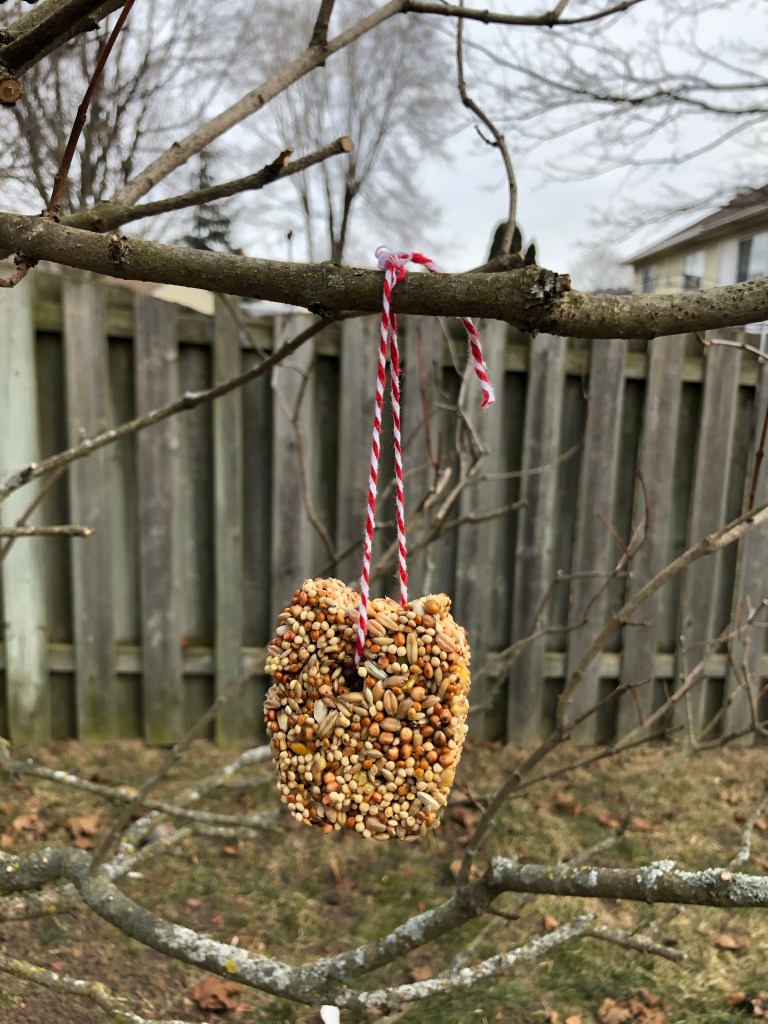
At home bird feeders provide a rich opportunity for children to learn many different skills, while observing nature.
Supplies
- 2 cups birdseed
- 2 tbs or 2 individual packets of unflavoured gelatin
- 2/3 cup boiling water
- Cookie cutters
- Straw (cut into pieces)
- Parchment paper (or wax paper)
- Large bowl
- Baking sheet
- Twine

Instructions
- Dissolve 2 tbsp (or 2 individual packets) of gelatin in 2/3 cup of boiling water.
- Add 2 cups of birdseed to completely dissolved gelatin. Mix for 2 minutes to allow the seeds to soak up gelatin mixture.
- Place cookie cutters onto a baking sheet lined with parchment paper.
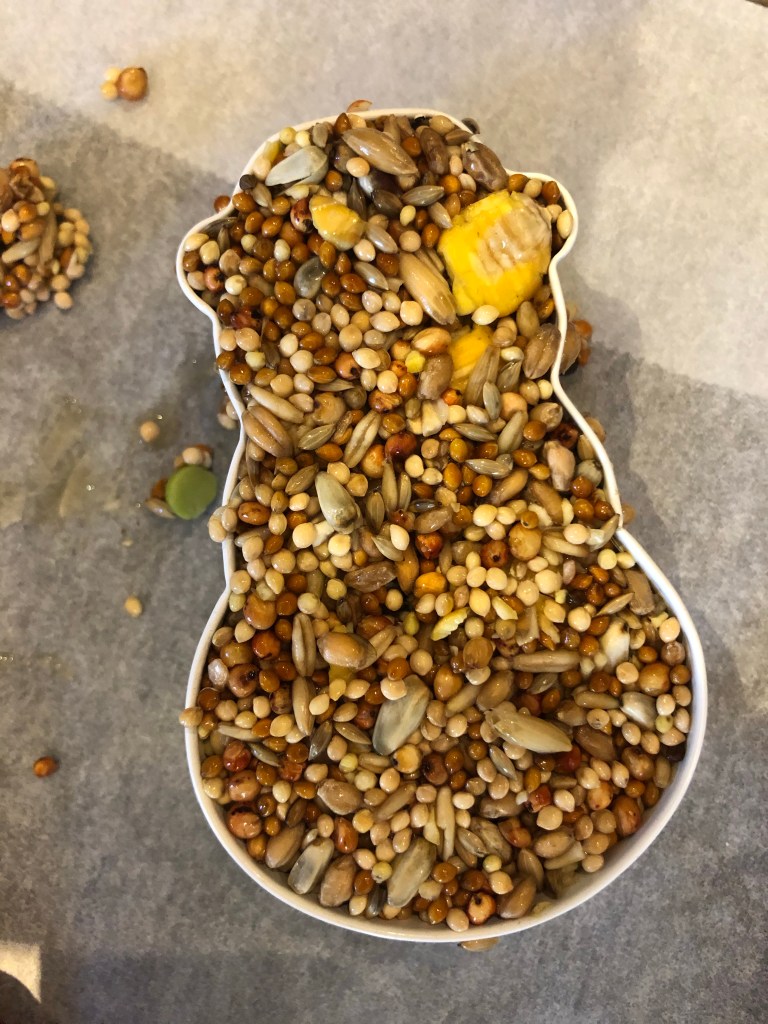
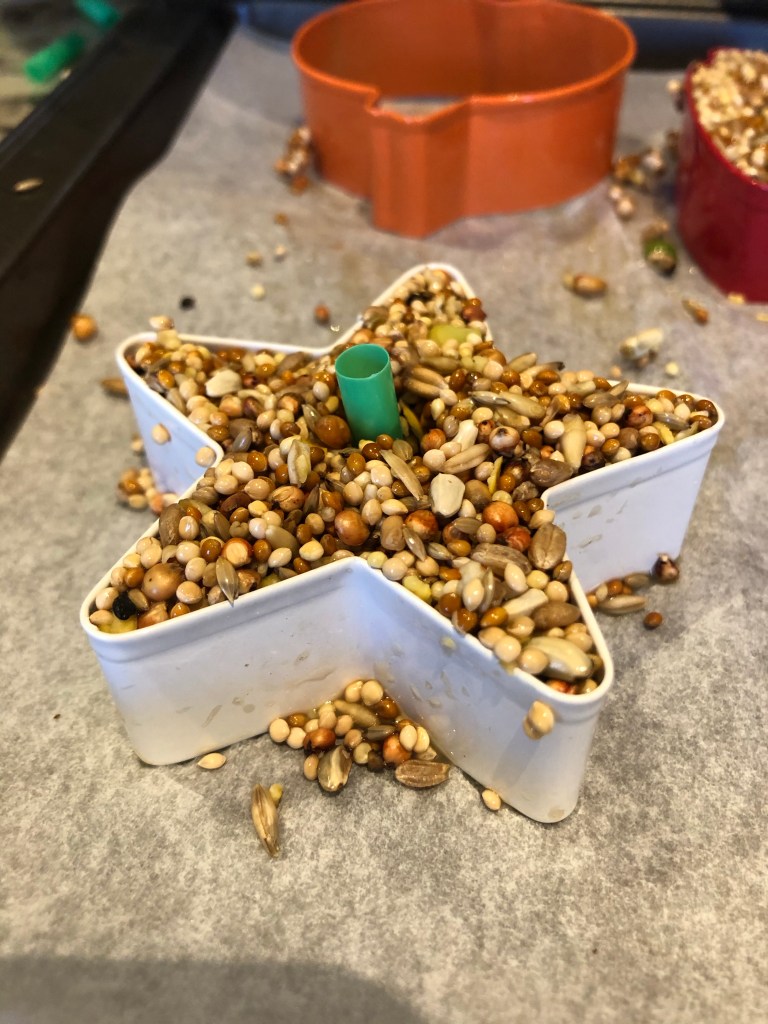
- Fill cookie cutters with mixture (slightly above top), as the mixture needs to be tightly packed inside the cookie cutters.
- Place another sheet of parchment paper over the filled cookie cutters and press firmly to pack the seeds.
- Gently insert a straw into each shape. This will create a hole for the ornament to be hung.
- Allow the birdseed cookies to dry for 3-5 hours, flipping them half way though.
- Gently push the ornament out of the cookie cutters.
- Allow to continue drying overnight.
- Gently remove the straw the next morning. Loop the twine through the hole and secure with a knot.
- Your ornament is now ready to be hung outside. Enjoy observing the birds eat their treat.

Adaptations
- Have a clipboard with paper and a pencil attached so that children can draw or write down their observations. (can also be attached to the window).
- Have binoculars available at a nearby window to observe the different birds and squirrels who visit the feeder. Tip: We like to use a suction cup hook attached to the window to hold the binoculars so that they are easily accessible).
- Provide markers, pencil crayons, or water paints so the child can document what they see.
- Explain the differences between types of birds, and males vs females (colours, size, appearance). Create a chart that children can fill in or check off every time they see a particular kind of bird. We get a lot of Goldfinch in our yard, and my daughter loved checking off whether it was male or female.
- Incorporate math skills by adding up how many females, males, or kinds of birds.
- Offer books about birds and squirrels for research (or print information off the internet).
- Encourage children to ask questions and express their thoughts: what do birds eat? where do they sleep? Where do they live? What colours do you see? What sounds do they make? Different birds sound different? Can you tell what bird it is by how it sounds?
- The University of Guelph created these amazing Biodiversity Identification sheets that are a fun addition to bird watching. The sheets are available for purchase for a small fee. https://www.uoguelph.ca/arboretum/educationandevents/id-sheets/backyard-birds
Skills
- Observation
- Sight
- Cognitive
- Listening
- Visual discrimination
- Math
- Language
- Fine Motor
- Science: animals, nature, observation, record taking, documentation, environment, habitat etc
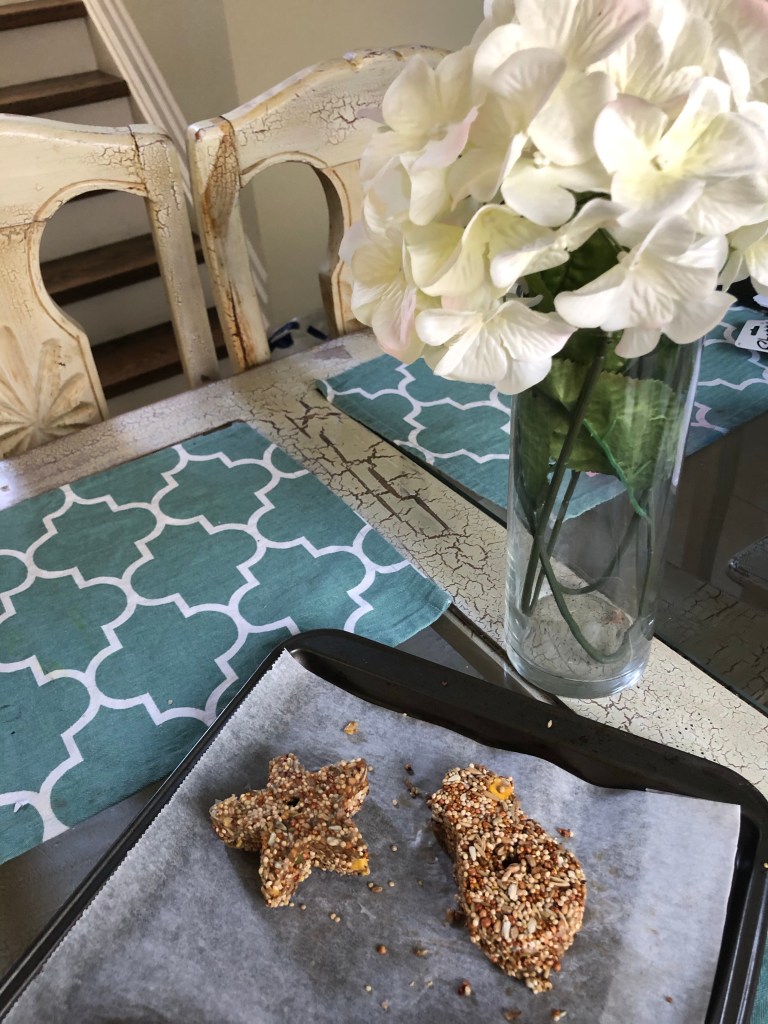
Birdseed ornaments air drying.

 zubyandbeans.ca